

Most of the water leaks we find in Bay Isles were never visible when they started. They sat behind drywall, under tile, or beneath a slab for weeks before anything reached the surface. By the time a homeowner sees actual water, the repair has usually grown well past the original problem.
Bay Isles homes have a few characteristics that make this worse. The Gulf humidity keeps building materials damp enough that moisture does not evaporate the way it would inland. Much of the housing stock sits on slab foundations, which hides supply lines completely. And a large share of properties along Gulf of Mexico Drive sit empty for months at a time, so a slow leak has no one around to notice it.
The good news is that hidden leaks almost always announce themselves before they cause structural damage, provided you know what to listen for and look at. Below are the seven indicators our technicians rely on most, along with what each one typically means. If you want an overview of the work we handle in the area, our Bay Isles plumbing services page covers it.
1. Water Stains on Walls and Ceilings
Staining is often the first visible clue, and its shape tells you a great deal about what is happening behind the surface.
Stains usually begin as small discolored patches in a yellow or brown tone. They rarely look urgent at first, which is exactly why they get ignored. What matters is the pattern:
- Ring-shaped stains with defined edges typically point to an intermittent leak that wets an area and then dries repeatedly, often tied to fixture use upstairs.
- Dark, spreading stains without clear boundaries suggest an active, continuous leak that has not stopped long enough to dry.
- Peeling paint, bubbling wallpaper, or a soft texture in the drywall indicate moisture has been present long enough to break down the material itself.
In our service calls throughout Bay Isles, ceiling stains on a first floor almost always originate from a second floor bathroom or a supply line in the joist bay above, not from the spot where the stain appears. Water travels along framing before it drops, which is why the visible mark and the actual source are frequently in different rooms.
2. An Unexplained Increase in Your Water Bill
A leak that never becomes visible still shows up on the utility bill. The challenge is separating a real anomaly from normal variation.
Knowing Your Baseline
Pull the last twelve months of bills and identify what a typical month looks like for your household. Consistent usage followed by a sudden jump, with no change in occupancy or habits, is the clearest signal there is. A leak does not take days off, so the increase tends to hold steady rather than spike once and return to normal.
Accounting for Seasonal Swings
Some fluctuation is expected. Irrigation during the dry season, guests staying over, and a fuller household during the winter months all push consumption up legitimately. Comparing the current month against the same month in prior years filters most of this out. What should concern you is an increase that does not line up with any of those explanations.
Confirming It at the Meter
Rather than guessing, the meter gives a direct answer. With every fixture and appliance off, a meter that continues to register flow confirms water is moving somewhere it should not be. This is the single most useful check a homeowner can perform, and it costs nothing.
When the meter confirms movement but nothing is visible in the home, the next step is locating the source without opening walls or cutting into the slab. That is where professional leak detection comes in, using acoustic equipment and thermal imaging to pinpoint the line before any demolition happens.
3. Musty Odors Before Anything Is Visible
Smell often precedes sight by weeks. A persistent musty odor in a room means organic growth is already underway in an enclosed space, usually inside a wall cavity, under cabinetry, or beneath flooring.
This matters more here than in drier climates. Coastal humidity means Bay Isles interiors rarely dry out on their own, and a closed-up seasonal home with the air conditioning set high creates ideal conditions for growth. Homeowners returning after time away frequently describe the smell before they find any other evidence.
Pay attention to where the odor is strongest and whether it intensifies after water use. An odor concentrated near a bathroom wall, a kitchen base cabinet, or a laundry area narrows the search considerably. An odor that fills an entire floor generally points to something in the subfloor or the slab.
4. Damp or Soft Spots in Floors and Carpets
Flooring is where slab leaks tend to reveal themselves, and the signs are physical rather than visual.
What to Notice Underfoot
Walk the house barefoot and pay attention to what changes. A section of carpet that feels cool or heavy, a tile that feels warmer than those around it, or an area that gives slightly under weight all indicate moisture below. Warm spots on a slab floor are particularly telling, since they usually mean a hot water line under the concrete has failed.
Discoloration in carpet, separation at laminate seams, and cupping in hardwood planks are all moisture responses in the flooring material itself.
Assessing the Subfloor
Softness underfoot means the damage has already reached the structure below the finished surface. Hollow sounds, movement in the plank, or a spongy feel across a defined area indicate the subfloor has absorbed water over time.
On slab-on-grade homes, which describes a great deal of Bay Isles construction, these symptoms are the primary warning of a failed line beneath the foundation. Our slab leak repair work begins with locating the break precisely, because the difference between a targeted repair and an open trench across a living room comes down to how accurately the line is mapped first.
5. The Sound of Running Water With Everything Off
Sound carries well through pipes, and a quiet house makes it easy to hear what would otherwise be masked.
A faint hiss, a continuous trickle, or a gurgle heard when nothing is in use means water is moving under pressure through a compromised line. The sound is most audible at night or early morning. Where you hear it is a reasonable starting point, though pipe runs carry noise well away from the actual break.
This symptom is worth taking seriously because a leak audible through a wall is typically a pressurized supply line rather than a slow drain seep. Supply leaks release water continuously and cause damage far faster.
6. Changes in Water Pressure and Flow
Pressure irregularities are the symptom homeowners are most likely to dismiss as an appliance problem, but they often reflect water escaping the system before it reaches the fixture.
Watch for:
- A noticeable drop in pressure at a tap that previously ran strong
- Flow that weakens significantly when a second fixture is opened
- Gurgling or sputtering from the tap, indicating air entering the lines
- Pressure that varies between different areas of the home rather than uniformly
A single fixture behaving poorly usually points to that fixture. Pressure loss across multiple fixtures, or loss that developed suddenly rather than gradually, points to the supply system itself.
For properties that sit vacant during the off season, this is a difficult sign to catch since no one is there to notice. Many Bay Isles owners address that gap with smart water shutoff valves and leak alarms, which monitor flow continuously and can close the main automatically when they detect a pattern consistent with a leak.
7. Visible Mold or Mildew in Unexpected Places
By the time growth is visible, moisture has been present for a while. Location is what makes this sign diagnostic.
Growth inside a shower is a ventilation issue. Growth on a bedroom baseboard, behind a piece of furniture against an exterior wall, on a closet ceiling, or at the base of a kitchen cabinet is a plumbing issue until proven otherwise. Those areas have no ordinary moisture source.
What makes this sign urgent rather than merely informative is what it represents:
- Structural consequence. Sustained moisture degrades framing, subfloor, and drywall, turning a plumbing repair into a construction project.
- Air quality consequence. Growth in an enclosed cavity circulates through the home every time the air handler runs.
- Rate of spread. In Gulf coast humidity, growth expands through a wall cavity quickly once it establishes, which is why the visible patch is almost always smaller than the affected area.
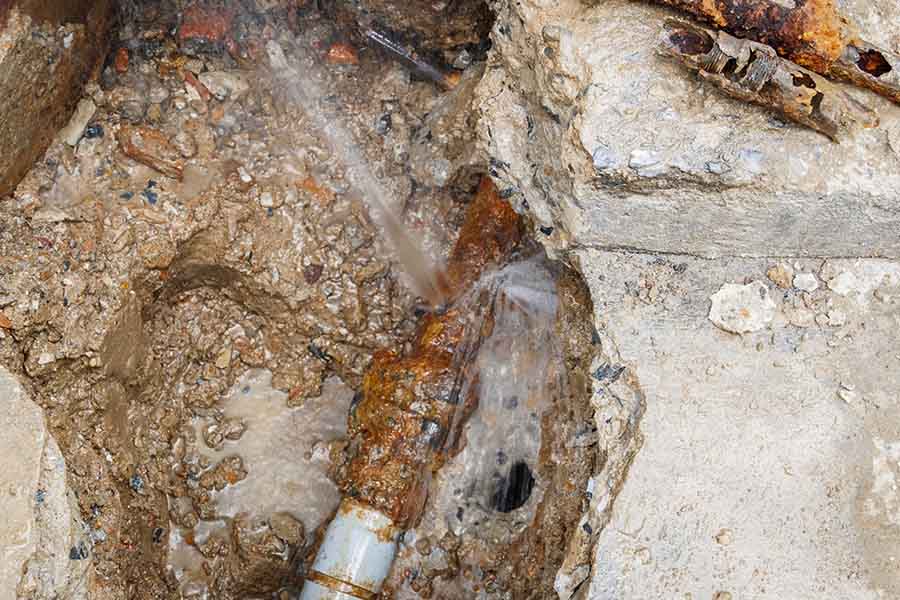
Protecting Your Bay Isles Home With Next Level Plumbing
Any one of these signs on its own can have an innocent explanation. What should prompt a call is a combination, or any single sign that persists.
A practical way to sort it out: start at the meter. If it registers flow with the house shut down, you have a confirmed leak and the question is only where. If the meter is still but you are seeing staining, odor, flooring changes, or pressure loss, something is wrong that a visual inspection will not resolve on its own, and the source needs to be located with the right equipment rather than found by opening walls.
The reason we push for early evaluation is not the plumbing repair itself, which is usually straightforward. It is everything that follows a leak left alone: the flooring, the cabinetry, the drywall, and the remediation. Those costs scale with time in a way the pipe repair never does.
Next Level Plumbing works throughout Bay Isles and Longboat Key, and our technicians locate leaks with acoustic and thermal equipment before recommending any repair, so nothing gets opened up unnecessarily. If something in your home h