
If your Nokomis home relies on a private well for its water supply, you already know that maintaining it is your responsibility. Unlike municipal water, which is tested and treated by the county before it reaches your tap, well water quality and system performance depend entirely on how well the system is maintained. In a community like Nokomis, where rural character and proximity to the Intracoastal Waterway and Oscar Scherer State Park make private wells common, that responsibility deserves serious attention.
Well systems are remarkably dependable when they’re properly maintained, but they can develop problems quietly and without obvious warning signs until something goes wrong. Staying ahead of those issues through routine care and professional oversight is the most reliable way to protect your water supply, your plumbing system, and your family’s health. Here are 10 well-maintenance tips every Nokomis homeowner should keep in mind.
1. Test Your Water at Least Once a Year
Annual water testing is the single most important thing you can do to stay on top of your well’s performance and water quality. A comprehensive water test checks for bacteria, nitrates, pH levels, hardness, and other contaminants that can affect both safety and taste. In Nokomis and the surrounding areas of Sarasota County, agricultural activity, proximity to natural water bodies, and local soil composition can all influence what ends up in your groundwater over time.
Testing gives you a baseline to compare against each year, making it easier to spot changes before they become serious concerns. Our well services team can arrange professional water testing and walk you through what the results mean for your household.
2. Schedule a Professional Well Inspection Regularly
Beyond water testing, the physical components of your well system need professional evaluation regularly. A thorough inspection covers the wellhead, casing, pressure tank, pump, electrical connections, and all associated hardware. Problems like a cracked casing, a failing pressure tank, or corroded connections can develop gradually without affecting water quality right away, but left unaddressed, they can lead to much more significant failures.
In our service calls throughout Nokomis, we find that many well problems that turn into expensive repairs could have been caught and resolved much earlier with routine professional oversight. An annual or biannual inspection is a straightforward investment that pays for itself by catching issues while they’re still manageable.
3. Keep the Area Around Your Wellhead Clear
The wellhead is the visible portion of your well system above ground, and what surrounds it matters. Landscaping, mulch, soil, and debris that accumulate around the wellhead can trap moisture, promote corrosion, and in some cases provide a pathway for surface water and contaminants to enter the well casing.
Keep the area around your wellhead free of:
- Overgrown vegetation and tree roots
- Mulch and soil piled against the casing
- Lawn equipment, chemicals, and fertilizers are stored nearby
- Standing water from irrigation or drainage runoff
A clear, dry perimeter around your wellhead is a simple maintenance habit that helps protect your water supply from surface contamination year-round.
4. Know the Location of Your Well and Septic System
This one sounds basic, but it’s surprising how many homeowners don’t have a clear picture of exactly where their well and septic system are located relative to each other and to the property boundary. In Florida, regulations require a minimum separation distance between a well and a septic system, and that separation exists for good reason. Septic systems that are too close or that have developed leaks or failures are among the most common sources of well water contamination.
Knowing the layout of both systems on your property allows you to monitor for potential issues, avoid digging or building in critical areas, and provide accurate information to service professionals when they visit.
5. Protect Your Well From Flooding and Surface Runoff
Nokomis sits in a low-lying coastal area where flooding and heavy surface runoff during Sarasota County’s rainy season are serious concerns. Floodwater carries bacteria, agricultural chemicals, and other contaminants that can infiltrate a well if the casing is compromised or if water pools around the wellhead.
After any significant flooding event, it’s worth having your water tested before resuming normal use. If your well is in an area prone to standing water after heavy rain, raising the wellhead above the flood zone and improving drainage around the perimeter are steps worth discussing with a professional. This is particularly relevant for properties near the lower-lying areas between US-41 and the Intracoastal in Nokomis.
6. Monitor Your Water Pressure
Changes in water pressure are often the first sign that something is developing in your well system. Low or fluctuating pressure can indicate a failing pressure tank, a worn pump, a drop in the water table, or a developing line blockage. Rapid cycling on and off, sometimes called short cycling, is a common sign of a waterlogged pressure tank that needs attention.
Based on what we see in Nokomis properties, pressure issues that are caught early are almost always much simpler and less expensive to resolve than the same problems caught after they’ve progressed. If you notice changes in how your water pressure feels or behaves, don’t wait to have it looked at.
7. Never Pour Chemicals or Hazardous Materials Near Your Well
What goes into the ground around your property can directly affect your water supply. Pesticides, fertilizers, motor oil, paint, cleaning solvents, and other household chemicals can leach through the soil and into your groundwater, particularly in sandy Florida soils where filtration is limited.
Be deliberate about where you store and dispose of chemical products on your property. Keep them well away from your wellhead and any low spots where runoff could carry them toward the well. This applies to lawn care products, which are widely used in Nokomis neighborhoods and can accumulate in groundwater over time with regular applications.
8. Address Changes in Water Taste, Odor, or Appearance Immediately
Your senses are a useful early warning system for water quality issues. Water that suddenly smells like sulfur or rotten eggs, tastes metallic or bitter, or appears cloudy or discolored is telling you something has changed in the system. These changes can result from bacterial contamination, a shift in the local water table, corrosion in the casing or pump components, or a change in nearby land use.
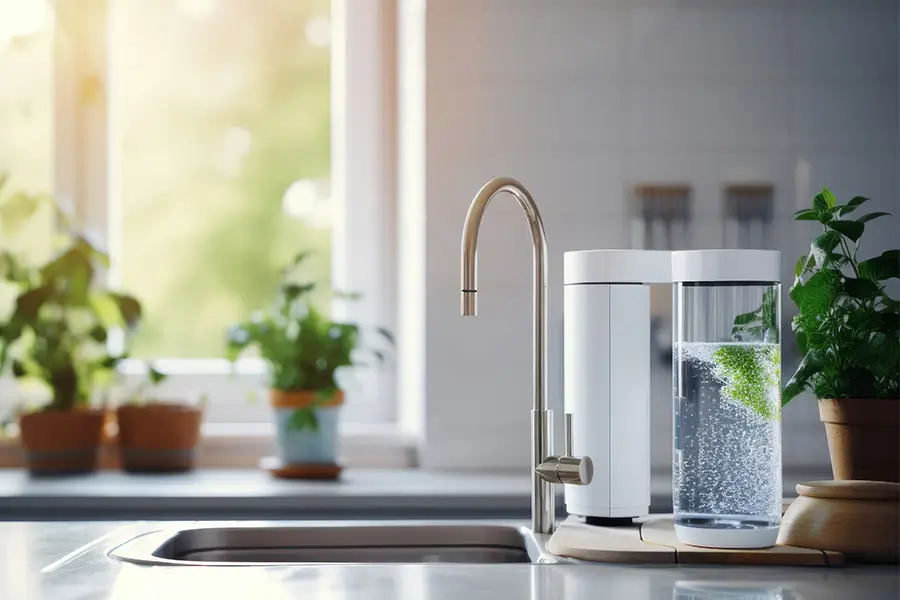
Don’t wait to act on these signals. A water quality change that’s caught quickly is much easier to diagnose and resolve than one that’s been developing for months. Pairing professional well service with a quality water filtration system gives you an additional layer of protection and peace of mind between annual testing cycles.
9. Maintain Your Pressure Tank and Pump System
The pressure tank and pump are the mechanical heart of your well system. The pressure tank maintains consistent water pressure throughout your home by storing pressurized water and releasing it on demand. The pump pulls water from the well and keeps the tank charged. Both components require periodic attention to function reliably.
Pressure tanks have an air bladder inside that can fail over time, leading to the short cycling described earlier. Pumps have a finite service life and can develop issues with motor wear, bearing failure, or impeller damage. Working in homes across Nokomis, our team regularly services both components as part of comprehensive well maintenance. Staying current on pump and tank health prevents the kind of sudden failure that leaves a household without water.
10. Work With a Local Plumber Who Knows Well Systems
Well maintenance is specialized work, and not every plumber has deep experience with private well systems. The specific characteristics of Nokomis groundwater, the local soil conditions, the effects of Sarasota County’s rainy season on the water table, and the particular demands placed on well systems in a coastal community all matter when diagnosing problems and recommending solutions.
A local team that has serviced well systems throughout Nokomis and the broader Sarasota area brings practical field knowledge that translates directly into better diagnosis, better recommendations, and better outcomes for your system. A water softener is also worth considering alongside your well service, as Nokomis groundwater tends to be hard, which can affect your pipes and appliances over time.
Keeping Your Nokomis Well Running Reliably
A well-maintained private well is a dependable and cost-effective water source for your home. The key is staying consistent with testing, inspections, and attentive care that catches small issues before they become major problems. In a community like Nokomis, where many homes depend on private wells and local environmental conditions add unique challenges, that consistency makes a real difference.
At Next Level Plumbing, we bring hands-on experience with well systems throughout the Sarasota area and the knowledge to keep yours performing reliably year-round. If it’s been a while since your well was inspected or your water tested, contact our team today so we can make sure everything is in good shape.